

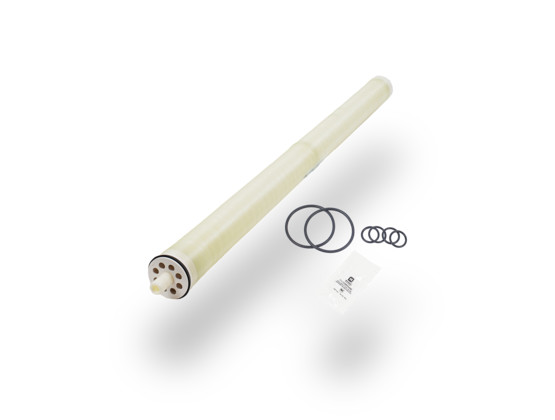
2.5″X40″ Replacement Membrane (OEM Part)
$812.00
While a well-cared for membrane will last many years, they may need to be replaced in the lifetime of your watermaker.
Please note that this is the Spectra approved membrane that if your unit is still under warranty will be needed for your unit to avoid negating and or void any future or current warranty claims. These are not in stock at our warehouse and will be needed to ship from California directly to you, so when ordering be aware that this might take up to 6 business days to receive and your order may come in multiple shipments.
Can be used on these models of Watermakers:
- The CapeHornExtreme330 uses one SW2540
-
The Catalina 300 and 340 uses a single SW2540
-
The NewPort 400 uses a single SW2540
- The NewPort 700 uses two SW2540
- The NewPort 1000 uses three SW2540
Frequently Asked Questions About Watermaker Membranes
How do I know when it’s time to replace my watermaker membrane?
A reverse osmosis membrane should only be replaced after confirming that the rest of your watermaker is operating correctly. If your system is producing less water than normal, your product water quality has declined, or your total dissolved solids (TDS) reading is consistently above 500 PPM, it may be time for a new membrane.
Before replacing the membrane, verify that your high-pressure pump, pressure settings, flow rates, and pre-filtration system are all operating to specification. For example, a worn or underperforming high-pressure pump can make a perfectly good membrane appear to have failed.
What makes one watermaker membrane different from another?
There are several manufacturers of reverse osmosis membranes, and each has slightly different characteristics. While membranes may have similar dimensions and specifications, performance, efficiency, and longevity can vary between manufacturers.
With proper maintenance, regular freshwater flushing, and normal operating conditions, a quality marine watermaker membrane will typically last 5 to 8 years.
Should I keep a spare membrane onboard?
In most cases, no. Reverse osmosis membranes do not store well for extended periods outside of a properly preserved watermaker system. Since most membranes last between 5 and 8 years, a spare membrane may deteriorate before you ever need it.
Instead, focus on maintaining your existing membrane properly through regular operation, freshwater flushing, and routine system maintenance.
I recently installed a new membrane, and it failed early. What could have caused it?
There isn’t a single answer because premature membrane failure can result from many different factors. Some of the most common causes include:
- Inadequate freshwater flushing after use
- Not flushing the system every five days during periods of non-use
- Operating in heavily contaminated or silty water
- Excessive operating pressure
- Poor pre-filtration
- Chemical exposure, including chlorine contamination
- Mechanical problems elsewhere in the watermaker system
Each situation is different, so diagnosing the entire system is important before concluding that the membrane itself is defective.
Why do some watermaker membranes last longer than others?
Membrane life depends on several factors, including membrane quality, water conditions, maintenance practices, and overall system health.
The longest-lasting membranes are typically found in systems that are:
- Flushed with fresh water after every use
- Flushed regularly during periods of non-use
- Operated within the manufacturer’s pressure specifications
- Protected by clean, properly maintained pre-filters
- Used in relatively clean source water whenever possible
With proper care, it’s common for a marine watermaker membrane to provide reliable service for 5 to 8 years.
Should I clean my membrane before replacing it?
Yes. If you’ve confirmed that the rest of the watermaker is operating correctly, a membrane cleaning is often worth trying before purchasing a replacement.
However, in many boat-based watermakers, by the time performance has declined enough to require chemical cleaning, the membrane is already nearing the end of its service life. Cleaning may improve performance temporarily, but replacement is often the more permanent solution if the membrane is old or heavily fouled.
| Dimensions | 42 × 4 × 3 in |
|---|


