

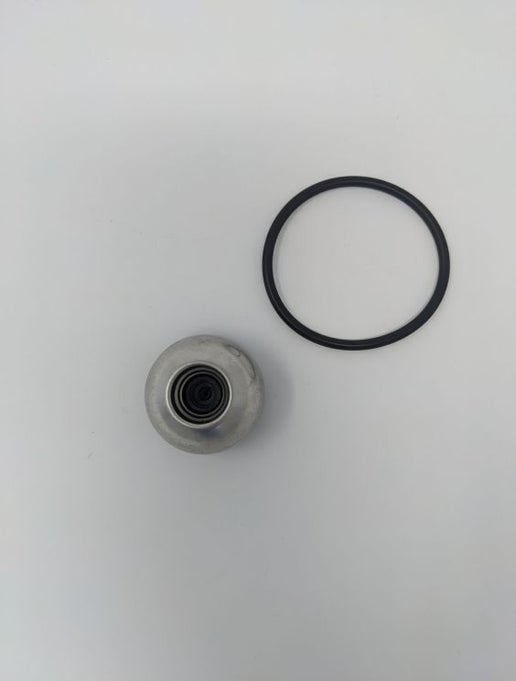
Boost Pump Impeller
$45.00
This is the impeller for the boost pump on models like the Cape Horn Extreme / Ventura / Catalina.
If you have any questions on what you might need or don’t see something on the website send us an e-mail or call and we will help assist you!
SKU: EL-FP-BPLDC824IM
Categories: Spectra Watermakers, Spectra Parts
Tags: boost, impeller, pump, Spectra
Brand: Spectra
Spectra Watermaker Boost Pump Impeller FAQs
How Do I Know If My Spectra Watermaker Boost Pump Impeller Is Bad?
The boost pump impeller (also called the rotor) is one of the most common wear items on Spectra watermakers that use a Laing boost pump. A worn rotor can reduce water flow, cause low inlet pressure, trigger system alarms, or prevent the watermaker from operating correctly.
Fortunately, the rotor is easy to inspect without replacing the entire pump.
To inspect the boost pump impeller:
- Close the raw water intake through-hull since the boost pump is typically installed below the waterline.
- Unscrew the black knurled retaining ring by hand.
- Carefully remove the pump body.
- Pull the magnetic rotor straight out with your fingers.
- Inspect the socket on the back of the rotor where it rides on the small white ceramic ball.
A healthy rotor will have a perfectly centered socket and should spin smoothly with no wobble.
If the socket is worn off-center, angled, or elongated, the rotor should be replaced.
Also inspect the chrome portion of the rotor. If you notice a polished wear mark, look inside the motor housing for a matching wear spot near the ceramic ball. This indicates the rotor has been dragging instead of spinning freely.
A properly functioning rotor should spin effortlessly. Any hesitation, wobbling, or roughness indicates it has reached the end of its service life.
The good news is that the rotor can usually be replaced without replacing the entire boost pump.
What Are the Symptoms of a Worn Spectra Watermaker Boost Pump Impeller?
A worn boost pump impeller typically causes reduced water flow to the feed pump rather than a complete failure.
Common symptoms include:
- Low incoming water flow
- Feed pump starvation
- System shuts down shortly after starting
- Difficulty priming the system
- Cavitation noise from the feed pump
- Intermittent low-pressure alarms
- Reduced system reliability
- Connect systems displaying a “-3” boost pump fault
- Pre-filter bowls running unusually low during operation
Because the boost pump supplies positive inlet pressure to the feed pump, even slight wear on the rotor can affect overall system performance.
Can a Damaged Boost Pump Impeller Cause Low Water Flow?
Yes.
The boost pump’s job is to supply a steady volume of seawater to the feed pump under slight positive pressure.
When the rotor becomes worn, damaged, or begins slipping, it cannot move enough water. The feed pump then receives less water than it was designed to handle, causing reduced inlet flow.
Modern Spectra systems monitor this condition and may shut the watermaker down to protect the high-pressure components.
On Connect systems, a single “-3” indicator commonly points to a boost pump problem that should be investigated before restarting the system.
Can a Worn Boost Pump Impeller Prevent My Spectra Watermaker From Building Pressure?
Not directly.
The boost pump does not generate the operating pressure used to produce fresh water. System pressure is created by the feed pump together with the Clark Pump.
However, the boost pump provides the feed pump with adequate incoming water pressure.
If the boost pump cannot supply enough water, the feed pump may become starved, cavitate, or shut the system down before operating pressure is reached.
While the boost pump is not responsible for creating pressure, it plays an important role in allowing the high-pressure system to operate properly.
Why Is My Spectra Watermaker Feed Pump Starving for Water?
Feed pump starvation is usually caused by a restriction somewhere between the seawater intake and the feed pump.
Common causes include:
- A worn boost pump impeller
- Failed boost pump
- Closed intake through-hull
- Clogged raw water strainer
- Dirty 20-micron or 5-micron pre-filters
- Blocked check valve
- Kinked intake hose
- Air leaks in plumbing connections
- Air entering around pre-filter housings
- Loose hose clamps
- Failed Teflon tape on threaded fittings
- Air lock in systems with multiple feed pumps
- A failing or decoupling feed pump
Proper troubleshooting should begin at the seawater intake and continue through each component until the feed pump.
Can a Bad Boost Pump Impeller Cause Cavitation?
Yes.
When the boost pump cannot supply enough water, it becomes a restriction instead of an assist.
As water demand increases, the feed pump begins pulling harder than the boost pump can supply. This creates low inlet pressure, allowing vapor bubbles to form inside the feed pump.
This condition, known as cavitation, can reduce water production and eventually damage the feed pump if left unresolved.
If your pre-filter bowls begin running low during operation, cavitation caused by inadequate boost pump flow should be considered.
What Causes a Spectra Watermaker Boost Pump Impeller to Fail?
The most common causes include:
- Normal wear over time
- Running the boost pump dry
- Operating with a closed intake through-hull
- Debris entering the pump
- Continuous operation under poor inlet conditions
- Age-related wear of the rotor socket
Most failures occur gradually as the socket that rides on the ceramic ball becomes worn and allows the rotor to wobble instead of spinning smoothly.
Can Running the Boost Pump Dry Damage the Impeller?
Yes.
Water flowing through the boost pump lubricates and cools the rotor.
Running the pump without water—even for a relatively short period—can rapidly wear the socket that rides on the ceramic ball.
Once the socket becomes worn, the rotor no longer spins concentrically, reducing efficiency and eventually requiring replacement.
Always verify that the intake through-hull is open before operating the watermaker.
Can Debris Damage the Boost Pump Impeller?
Yes.
Sand, shell fragments, marine growth, and other debris can enter the pump if the raw water filtration system becomes compromised.
Installing an additional raw water strainer before the Spectra boost pump strainer and check valve provides an extra level of protection and helps extend the life of the rotor.
Routine inspection and cleaning of strainers can significantly reduce debris-related failures.
Does Age Affect Spectra Watermaker Boost Pump Impeller Performance?
Yes.
Even with excellent maintenance, boost pump rotors gradually wear from continuous operation.
Over time, the socket becomes enlarged, allowing the rotor to wobble instead of spinning smoothly. This reduces pumping efficiency and eventually affects overall watermaker performance.
Routine inspection during annual maintenance can identify wear before it causes unexpected failures.
Which Spectra Watermaker Models Use a Laing Boost Pump?
Most Spectra watermakers use a Laing boost pump.
The primary exceptions are:
- Ventura 150
- Ventura 200T
- Cape Horn Extreme 330
These models normally operate without a boost pump.
However, certain installations can benefit from adding one, especially when:
- The seawater intake plumbing is unusually long.
- The intake hose must rise above the waterline.
- The installation creates excessive suction on the feed pump.
In these situations, adding a boost pump can improve reliability, reduce feed pump wear, and provide more consistent system performance. Halden Marine Service can advise whether a boost pump retrofit is appropriate for your installation.
Be the first to review “Boost Pump Impeller”Cancel Reply


Reviews
There are no reviews yet.